RevOps as a Service: How B2B Teams Use It to Drive Pipeline in 2026
RevOps as a service for B2B in 2026: what it includes, how AI search changes the model, the 5 capabilities that matter, and the operator playbook we run.

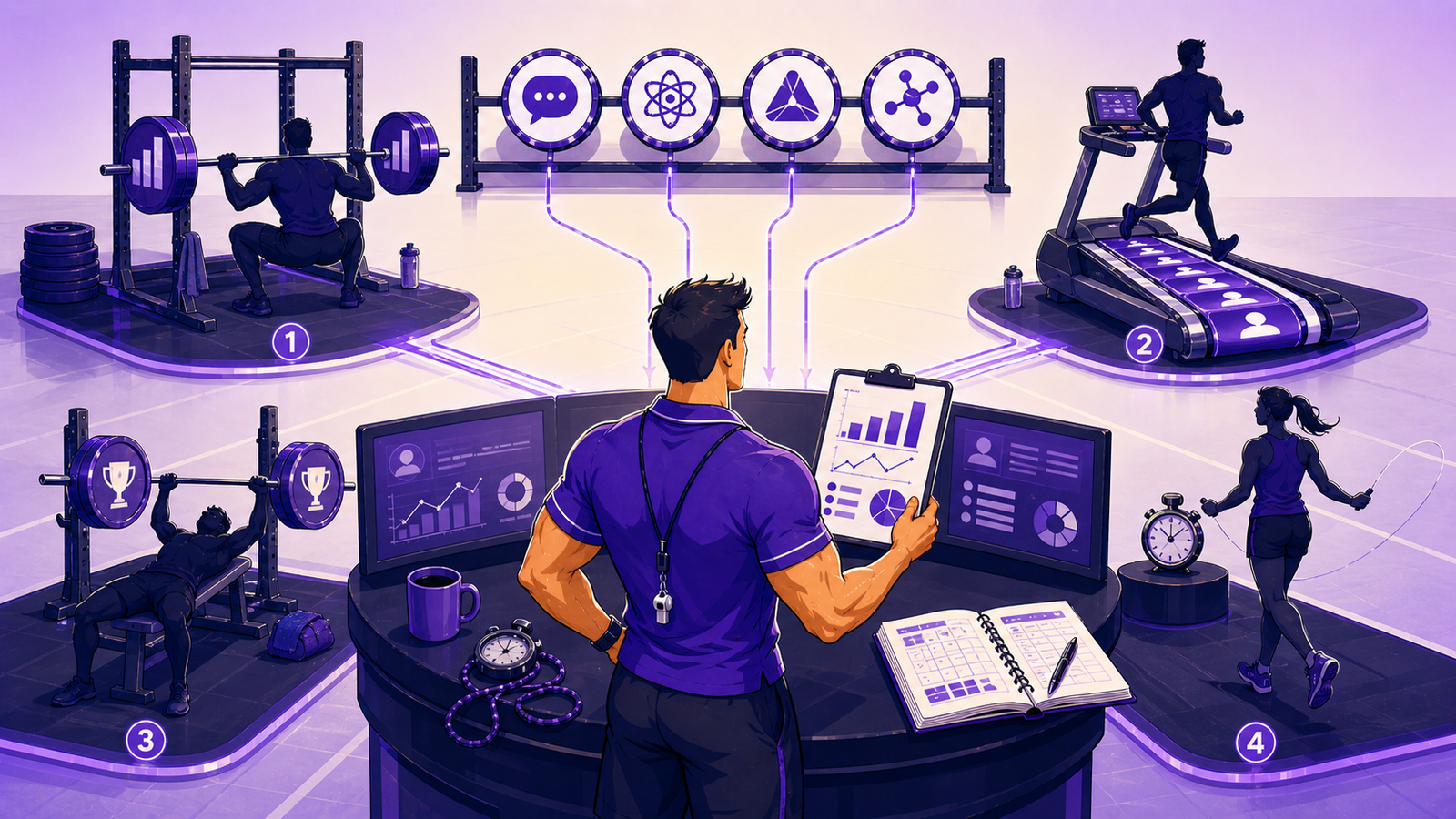
Most B2B teams that need a RevOps function cannot justify a $180K full-time hire at $3M to $15M ARR. RevOps as a service plugs the gap with a managed operator stack at roughly a third of that cost, and ships in week one.
The model changed in 2026. The providers worth hiring now bundle AI search visibility into the RevOps stack, because the channel that opens most B2B buying journeys today sits upstream of the CRM and outside Google Analytics.
What does RevOps as a service actually include?
The classic version of RevOps as a service is four pillars: CRM hygiene, attribution instrumentation, funnel reporting, and cross-team handoff design. That was the 2024 scope and most providers still sell it.
The 2026 version adds AI search visibility tracking and source-citation attribution, because B2B buyers now arrive pre-shortlisted by ChatGPT and Perplexity. According to Bain insights on B2B revenue operations, teams that instrument AI-sourced inbound see 30 to 50 percent higher close rates on those leads. The number is not surprising once you see the data: a buyer who arrives with a citation already trusts you more than one who clicks a paid ad.
How is RevOps as a service different from hiring in-house?
In-house RevOps takes 4 to 6 months to hire and 12 to 18 months to fully ramp. RevOps as a service ships day-one outputs because the operator already runs near-identical stacks for two or three other B2B clients.
The trade-off is depth, not speed. An in-house operator eventually compounds product context that no external partner can match, which is why most companies past $20M ARR bring the function back inside.
| Dimension | In-house RevOps | RevOps as a service |
|---|---|---|
| Time to first output | 3-6 months | Week 1-2 |
| Annual cost | $150K-$220K | $48K-$120K |
| Product context depth | Compounds over years | Cross-client breadth |
| AI search visibility | Rarely included | Standard in 2026 stacks |
| Best fit ARR | $20M+ | $1M-$20M |
Which 5 capabilities should RevOps as a service deliver?
We use this five-item checklist when B2B teams ask us to vet competing providers. Skip any one of these and the engagement starts at a structural disadvantage you will pay for in quarter three.
- CRM hygiene + source tagging. Every inbound is tagged with channel, including AI-engine source as a first-class field, not a free-text comment.
- Attribution instrumentation. Multi-touch attribution wired into closed-won revenue, not just MQLs, because MQL-only attribution flatters your funnel and lies about pipeline.
- AI search visibility tracking. A defined query panel measuring citation share weekly across at least four engines. Without a panel, you cannot improve.
- Funnel reporting cadence. Weekly dashboard, monthly review, quarterly recalibration. Anything slower and the data is stale before anyone reads it.
- Cross-team handoff design. Marketing-to-sales-to-CS with clear SLAs at each gate, owners named, and a single escalation path when the SLA breaks.
RevOps in 2026 is not a CRM cleanup project. It is the layer that proves AI search is generating real pipeline, and the layer that tells you which dollar of marketing spend to cut next quarter.
How much does RevOps as a service cost in 2026?
Entry tier sits at $4K to $8K per month: CRM hygiene, basic attribution, monthly reporting. Suitable for $1M to $5M ARR B2B with one major data gap and no internal RevOps headcount.
Mid tier sits at $8K to $25K per month: full RevOps stack including AI citation tracking and weekly cadence. Most $5M to $50M ARR B2B should land here, and the providers worth hiring publish their playbooks before you sign.
Per Entrepreneur coverage of outsourced marketing operations, mid-market B2B teams routinely see 3-to-1 to 5-to-1 ROI on managed RevOps engagements within 6 to 9 months. We document the engagement shapes in the Veloice methodology, and the full deliverable list in Veloice services.
If you want to see whether your current RevOps stack measures the AI search channel that increasingly opens B2B buying journeys, request a free AI Visibility Snapshot. We run a 30 to 50 query panel against five engines and return the report inside a week, no sales call required.
What does a real RevOps as a service engagement look like?
A B2B services company in the recruiting category came to us at $9M ARR with a CRM that had 38 percent dirty lead-source data. Their inbound looked flat in dashboards even though AI-sourced leads were quietly climbing every month.
We tagged inbound forms with explicit AI-engine source options, rebuilt CRM custom fields for citation attribution, and ran a weekly citation panel against four AI engines. Within 90 days the team could see that 22 percent of inbound was AI-sourced, and that the segment closed 41 percent faster than paid leads.
Pipeline conversations with the CFO moved from defensive to investment-mode in one quarter. Marketing reallocated 18 percent of spend toward AI search visibility work the next quarter, and closed-won AI-sourced revenue showed up in the CRM by month six.
The lesson is operational, not creative. RevOps as a service unlocks pipeline that already exists but stays invisible until the instrumentation is in place to count it.
FAQ
Is RevOps as a service the same as a fractional CRO?
No. A fractional CRO sets revenue strategy and manages the sales team, while RevOps as a service builds the data and process layer the CRO depends on to make any decision worth making.
How long does RevOps as a service take to show ROI?
Most engagements show data quality lift inside 30 days and pipeline-attribution clarity by month three. Closed-won lift on AI-sourced inbound usually lags by another quarter, which is why we contract in 6-month minimums.
Can a small B2B team afford RevOps as a service?
Yes. Entry tier engagements at $4K to $8K per month give a Series A team senior operator capability without a full-time hire, and you can see who Veloice helps for the size profiles we have run this for.
What CRM platforms does RevOps as a service typically support?
Mid-market B2B providers usually cover HubSpot, Salesforce, and Pipedrive. Smaller PLG-led SaaS often runs on Attio or native CRM stacks, which need provider expertise to instrument cleanly without breaking existing automations.
Should B2B teams expect AI search visibility tracking in 2026 RevOps engagements?
Yes. The 2024 standard was CRM hygiene plus attribution; the 2026 standard adds an explicit AI citation panel, because that channel now opens most B2B buying journeys. Providers still scoping around 2024 deliverables undercount pipeline by 20 to 35 percent on average, and we have audited enough of them to call it a pattern.
Written by
Saksham Solanki
Founder, Veloice · Veloice
Building Veloice, an AEO and GEO agency for B2B teams whose buyers research vendors in ChatGPT, Perplexity, Claude, and Gemini before contacting sales.
Connect on LinkedIn →